
Creating a stimulating habitat for your corn snake means building an enclosure that supports natural behavior, comfort, and curiosity without turning daily care into a complicated science project. In the wild, corn snakes spend their time exploring, hiding, climbing, and choosing where to rest based on temperature and security. A good captive habitat should allow those same choices in a safe and controlled way. Stimulation does not mean constant change or flashy décor, but rather thoughtful design that encourages movement and confidence. When the habitat is stimulating in the right way, corn snakes tend to be calmer, more active, and easier to care for over time.
A stimulating habitat also helps prevent long periods of inactivity that can quietly lead to stress or poor body condition. Snakes are often misunderstood as animals that do nothing, but that appearance usually means their environment does not invite engagement. Small design choices can make a big difference without overwhelming the snake or the keeper. The goal is balance, not excess. Think functional enrichment with a touch of creativity. If the enclosure feels like a place worth exploring, your corn snake will show you.
TLDR: How To Create A Stimulating Habitat For Your Corn Snake
A stimulating habitat goes beyond the basics by adding variety and opportunities for natural behavior. Including climbing structures, multiple hides, and different textures encourages exploring, hiding, and movement. Thoughtful layout and occasional changes help keep your corn snake engaged while still maintaining a safe and stable environment.
Understanding What Stimulation Means For Corn Snakes
Stimulation for corn snakes is very different from stimulation for mammals or birds. They do not need toys, mirrors, or constant interaction to stay healthy. Instead, stimulation comes from opportunities to move, choose, and explore at their own pace. A stimulating habitat allows the snake to decide where to go, when to rest, and how to move through its space. Choice is one of the most powerful enrichment tools available.
Corn snakes rely heavily on touch, temperature, and spatial awareness. They move along edges, follow pathways, and seek cover rather than crossing open areas. An enclosure that supports these instincts feels safer and more engaging. Stimulation should never force interaction or create stress. If the snake feels pressured, the habitat is not doing its job. True stimulation invites, it does not demand.
Starting With The Right Enclosure Layout
The layout of the enclosure sets the foundation for stimulation. Before adding décor, it is important to consider how the snake will move through the space. Floor space is more important than height, although a little vertical interest can add enrichment. The enclosure should not feel like a wide empty box. It should feel like a landscape with defined areas.
Dividing the enclosure visually into zones helps guide movement. A warm zone, a cool zone, and a neutral area give the snake reasons to travel. Hides, pathways, and cover should connect these zones naturally. When the layout flows, the snake moves more confidently. A thoughtful layout often matters more than the number of items inside.
If you need any guidance on Choosing The Perfect Enclosure For Your Corn Snake come check out this button
Providing Multiple Secure Hides
Hides are one of the most important elements of a stimulating habitat. They provide security, which is what allows exploration to happen in the first place. A corn snake that does not feel safe will not explore, no matter how interesting the enclosure looks. At least one hide should be placed on the warm side and one on the cool side. This allows the snake to regulate temperature without giving up security.
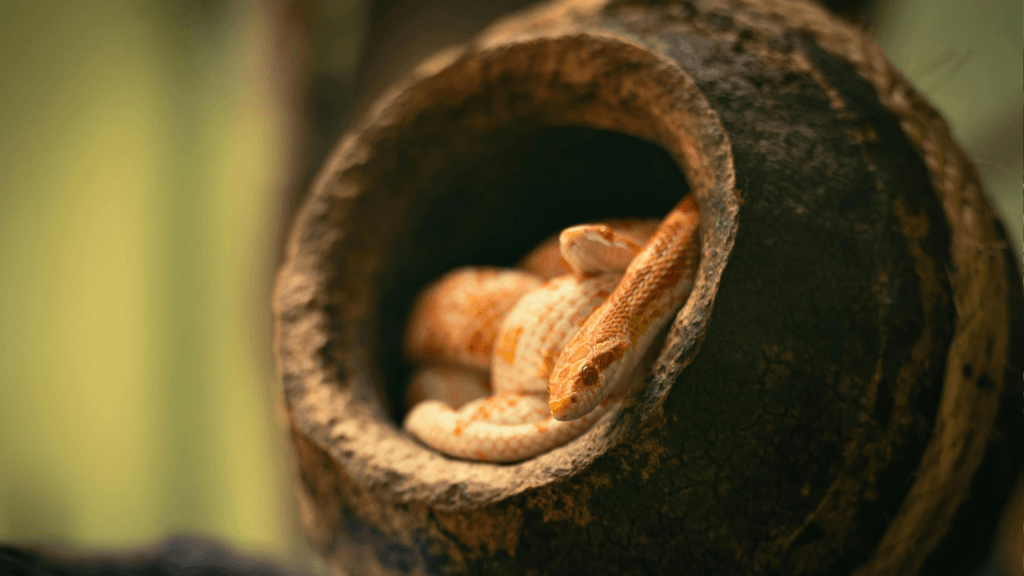
Additional hides can be placed in neutral areas or slightly elevated spots. Different shapes and sizes encourage the snake to rotate between them. Snug hides are usually preferred, especially after feeding. A hide that fits well makes the snake feel anchored rather than exposed. When hides are placed strategically, movement becomes a natural part of the snake’s routine.
Using Ground Cover To Encourage Movement
Ground cover such as leaf litter or similar materials adds visual security and texture. Corn snakes often move more when they feel partially concealed. Open substrate without cover can feel unsafe, even if the enclosure is otherwise correct. Ground cover breaks up empty space and creates natural pathways.
This type of cover should always be clean, dry, and reptile safe. It should not trap moisture or become moldy. Ground cover also adds sensory variety, which encourages exploration. When the snake feels less exposed, it moves more freely. Confidence grows when the environment supports it.
Adding Safe Climbing Opportunities
Although corn snakes are primarily ground dwellers, they do enjoy climbing when safe options are available. Branches, cork bark, or ledges allow gentle vertical movement. These items should always be secured to prevent shifting or collapse. Even modest climbing opportunities can add meaningful stimulation.
Climbing elements should complement floor space, not replace it. Placing branches diagonally or along enclosure walls creates natural routes. Snakes often use these paths during evening activity. Climbing adds exercise and variety without overcrowding the enclosure. A little height goes a long way.
Creating Clear Pathways And Routes
Corn snakes prefer defined routes rather than open wandering. Designing clear pathways through the enclosure encourages natural movement. These routes often follow enclosure edges, under cover, or between hides. Snakes may use the same paths repeatedly, which is a sign of comfort.
Pathways should not be blocked by too much décor. Open movement space is just as important as hiding space. When routes are clear, the enclosure feels larger and more usable. A well designed pathway system supports both activity and security. Think trail system, not obstacle course.
Using Texture Variety For Sensory Stimulation
Different textures add subtle but important stimulation. Smooth surfaces, rough bark, and varied substrate textures give the snake sensory feedback as it moves. This variety encourages exploration and supports natural behaviors like rubbing during shedding. Texture also helps with body awareness and movement control.
All textured items should be safe and free of sharp edges. They should be secured to avoid shifting. A mix of textures keeps the environment interesting without overwhelming the snake. Too much of one texture can feel monotonous. Balance keeps things engaging and comfortable.
Supporting Stimulation Through Temperature Design
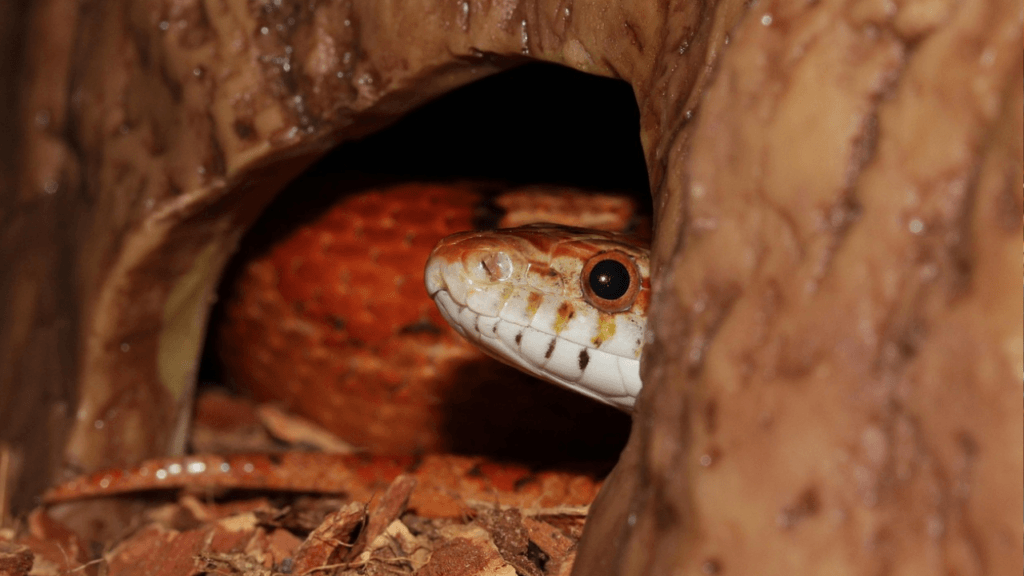
Temperature plays a major role in activity levels. A proper temperature gradient naturally encourages movement as the snake travels between warm and cool zones. Poor gradients often result in inactivity because the snake has no reason to move. Stimulation begins with functional heating design.
Placing hides and décor on both sides of the gradient encourages travel. The snake learns that comfort exists in more than one place. This promotes natural behavior and reduces stress. Temperature design is one of the most overlooked enrichment tools. When done well, it works quietly in the background.
Using Controlled Change For Mental Engagement
Occasional small changes can provide mental stimulation. This might include shifting a branch, rotating décor, or adjusting the angle of an object. These changes should be minor and infrequent. Too much change can cause stress rather than enrichment.
Snakes often investigate changes slowly and carefully. This controlled curiosity is healthy. It is best to change one element at a time and leave familiar items in place. Familiarity combined with novelty creates balance. Think gentle refresh, not full renovation.
Handling As Part Of A Stimulating Routine
Gentle, occasional handling can be stimulating when done correctly. Handling should never be forced or excessive. Calm, confident handling allows the snake to experience new environments safely. Over time, this can reduce fear responses and increase confidence.
Handling sessions should be short and timed appropriately, never during digestion. The goal is exposure, not endurance. A snake that is comfortable with handling often shows calmer behavior in the enclosure as well. Respectful interaction supports overall well being. And yes, the snake probably judges your confidence during handling, so fake it till you make it.
Observing Behavior To Guide Habitat Design
Observation is the most important tool in creating a stimulating habitat. Watching how your corn snake moves, rests, and explores provides direct feedback. Increased exploration and calm movement are positive signs. Constant hiding or pacing may indicate stress or imbalance.
Every snake has individual preferences. What works for one may not work exactly the same for another. Adjustments based on observation are far more effective than copying setups blindly. The snake communicates through behavior. Paying attention turns habitat design into a conversation rather than a guessing game.
Avoiding Overstimulation And Clutter
More is not always better when it comes to stimulation. Overcrowding the enclosure can restrict movement and airflow. Too many items can make the space feel chaotic rather than engaging. Snakes need open areas as well as cover.
Every item should serve a purpose. If something blocks pathways, traps moisture, or adds no functional value, it may not belong. A clean, balanced layout often provides better stimulation than a cluttered one. Simplicity supports function. Restraint is part of good design.
Long Term Benefits Of A Stimulating Habitat
A stimulating habitat supports physical health, mental engagement, and confidence. Snakes that move regularly tend to maintain better muscle tone and digestion. Reduced stress supports stronger feeding responses and cleaner sheds. Over time, care becomes easier because the snake is comfortable in its environment.
Stimulation also supports predictability. A snake that feels secure behaves more consistently. This makes it easier to notice real issues when they arise. A well designed habitat works with the snake rather than against it. Long term success is built on small, thoughtful choices.
FAQ: How To Create A Stimulating Habitat For Your Corn Snake
What makes a habitat stimulating for a corn snake?
A stimulating habitat gives your snake opportunities to move, hide, climb, and explore. This includes having multiple hides, climbing structures, varied textures, and a proper temperature gradient so the snake can choose where it feels most comfortable.
Why is a stimulating habitat important?
A stimulating habitat helps reduce stress, encourages natural behavior, and keeps your snake physically active. Without stimulation, corn snakes may become inactive or show signs of stress like constant hiding or trying to escape.
Can a basic enclosure still be effective?
Yes, but only if it includes the essentials. Even a simple enclosure should have hides, proper temperatures, and at least some enrichment. Adding small upgrades can make a big difference in how your snake behaves.
How many hides should I include?
At least two hides are necessary, one on the warm side and one on the cool side. Additional hides can improve comfort and encourage your snake to move around the enclosure more.
Where should hides be placed?
Hides should be placed on both sides of the enclosure so your snake does not have to choose between feeling secure and regulating its body temperature.
Do corn snakes need climbing space?
Yes, corn snakes are natural climbers and will use vertical space if it is available. Adding branches or vines gives them more ways to explore their environment.
What types of climbing structures work best?
Sturdy branches, cork bark, and reptile-safe vines work well. These should be stable and positioned in a way that allows your snake to move between levels safely.
Can I add different textures to the enclosure?
Yes, adding different textures like bark, substrate depth, and smooth surfaces helps create a more natural and engaging environment.
What substrate is best for stimulation?
Substrates like aspen bedding or coconut fiber allow for natural movement and some burrowing behavior, which adds to the overall stimulation.
How much space should be left open?
There should always be enough open space for your snake to move freely. Too much clutter can make the enclosure feel cramped and limit movement.
Can too much enrichment be a problem?
Yes, overcrowding the enclosure can cause stress and make it harder for your snake to navigate. Balance is important.
Should I rearrange the habitat?
Occasional rearranging can provide new stimulation, but it should be done gradually. Too many changes at once can stress your snake.
How often should I update the setup?
Small changes every few weeks are usually enough to keep the environment interesting without overwhelming your snake.
Do corn snakes prefer open or covered areas?
Corn snakes prefer areas where they feel covered and secure. Providing clutter and hides helps them feel safe enough to explore.
Can lighting affect how stimulating the habitat feels?
Yes, lighting that is too bright can make your snake feel exposed. Providing shaded areas helps balance the environment.
How do I create a natural feel in the enclosure?
Using natural-looking materials like wood, bark, and varied substrate can help create a more realistic and engaging environment.
Can enrichment improve feeding behavior?
Yes, a comfortable and stimulated snake is more likely to eat consistently and show natural feeding responses.
How do I know if my habitat is working?
If your snake explores, climbs, uses multiple hides, and shows normal activity, your habitat is working well.
What are signs the habitat needs improvement?
Signs include constant hiding, refusal to eat, lack of movement, or repeated escape attempts.
Should habitat setup change as my snake grows?
Yes, as your snake grows, you should upgrade the enclosure size and adjust enrichment to match its needs.
Can a stimulating habitat reduce stress?
Yes, giving your snake choices and a comfortable environment is one of the most effective ways to reduce stress.
What is the biggest mistake when setting up a habitat?
The biggest mistake is focusing only on size and ignoring enrichment. A large but empty enclosure is not as effective as a well-structured one.
Can I use both natural and artificial decor?
Yes, combining both can create a balanced and functional setup as long as everything is safe and secure.
Final Thoughts On Creating A Stimulating Habitat
Creating a stimulating habitat for your corn snake is about supporting natural behavior through thoughtful design rather than constant change. Secure hides, clear pathways, texture variety, and temperature balance work together to encourage movement and confidence. Observation guides improvement better than any checklist ever could. A stimulating enclosure does not need to be complicated, just intentional. When the habitat invites exploration while maintaining security, your corn snake will thrive and show it in subtle but meaningful ways.