Corn snake enclosure lid safety is one of the most important things to check when setting up your snake’s habitat. Corn snakes are curious, excellent climbers, and surprisingly good at finding escape routes. Even a tiny opening around a lid, door, or cable port can become a problem.
Fortunately, keeping your corn snake’s enclosure secure doesn’t have to be complicated. With the right locking equipment and a few regular safety checks, you can reduce escape risks and give your snake a safer place to explore.
TLDR: How to Keep a Corn Snake Enclosure Secure
A secure corn snake enclosure needs a properly fitting lid, compatible clips or locks, secure doors, and no accessible escape gaps. Check screen edges, ventilation panels, cable openings, and door seams before bringing your snake home. For glass aquariums, suitable screen lid clips can help prevent accidental openings, while front-opening terrariums should have reliable locking mechanisms. Always follow manufacturer instructions and never use adhesive tape to secure your snake’s enclosure.
Affiliate Disclosure: Some links in this article are affiliate links. If you purchase through these links, Snake Heaven may earn a small commission at no additional cost to you.
Why Corn Snake Enclosure Lid Safety Matters
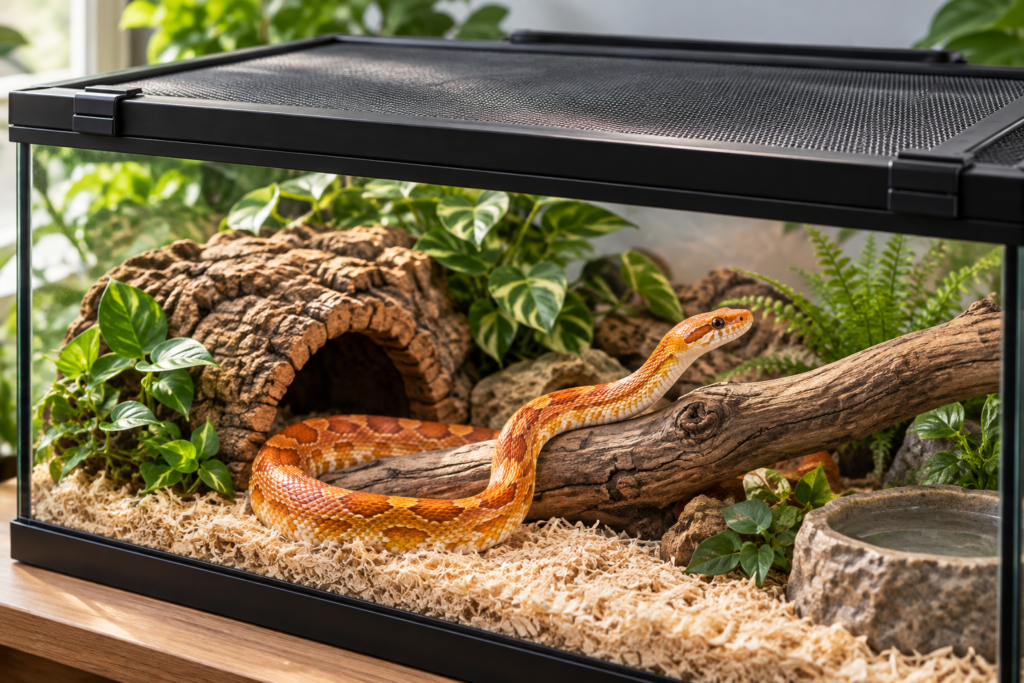
Corn snakes are natural explorers. They enjoy climbing, investigating their surroundings, and squeezing into sheltered spaces. These behaviors are perfectly normal, but they also mean that a loose enclosure lid can become an unexpected escape route.
Even a beautifully decorated habitat with comfortable hides, climbing branches, and proper heating isn’t safe if your snake can get out.
Younger corn snakes need particularly careful enclosure inspections. Their slender bodies may fit through openings that seem too small to be a problem.
An escaped snake can encounter household hazards, become trapped behind furniture, or struggle to find suitable temperatures and shelter.
That’s why checking the lid, locks, and enclosure openings should always be part of your setup routine.
If you’re still putting together your snake’s habitat, our guide to designing a safe and comfortable corn snake enclosure can help you with the rest of the setup.
7 Essential Corn Snake Enclosure Lid Safety Checks
1. Make Sure Your Corn Snake’s Lid Fits Properly
Before worrying about clips and locks, check whether your enclosure lid fits correctly.
A secure lid should sit evenly on its intended frame without lifting at the corners or leaving unexpected gaps. The screen and surrounding frame should also be free from damage.
This is particularly important when using glass aquariums with removable screen tops.
Some aquarium lids look similar but aren’t interchangeable. Choosing a screen cover that isn’t designed for your enclosure can leave gaps or prevent locking hardware from fitting properly.
What to check:
- Make sure the lid fits the enclosure’s exact dimensions and design.
- Inspect the corners and edges for gaps.
- Look for warped frames or damaged mesh.
- Confirm that heating and lighting equipment doesn’t interfere with the lid.
- Check that the cover sits correctly before installing its clips.
Tip: If your lid doesn’t fit correctly, replace it with a compatible cover instead of trying to force it into position.
2. Secure Screen Lids With Proper Clips or Locks
A lid that fits correctly still needs to remain securely closed.
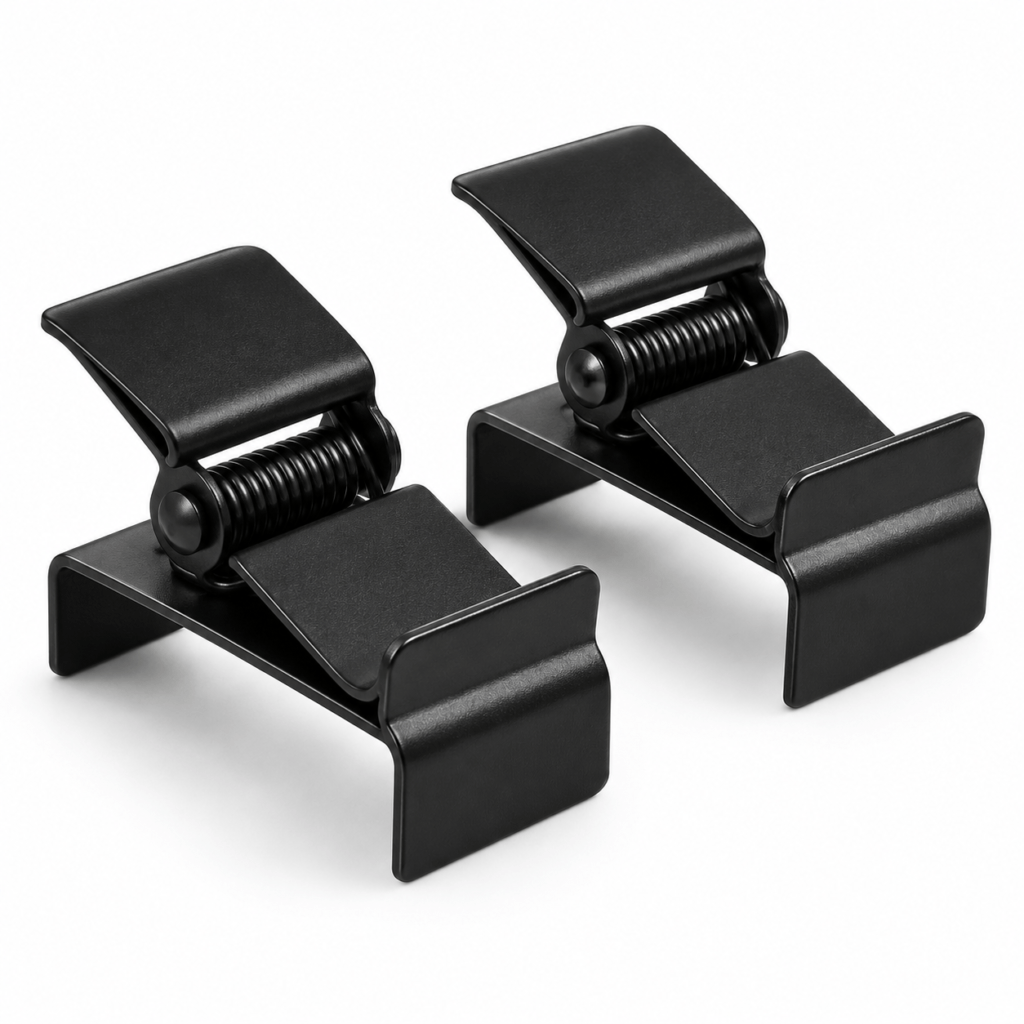
If you’re using a glass aquarium with a removable screen cover, reptile screen lid clips can help hold the cover in place.
ReptiFiles recommends at least four properly fitted lid clamps for glass aquariums, with additional clamps for larger enclosures. However, the exact hardware requirements depend on your aquarium and lid design.
Recommended Product: Zilla Heavy Duty Screen Clips
Learn More Zilla Heavy Duty Screen Clips
Zilla Heavy Duty Screen Clips are designed to help secure compatible reptile screen covers to glass terrarium frames.
They use spring steel construction and attach to the lid and enclosure frame without requiring permanent installation.
Zilla offers two general size categories:
- Small: Intended for tanks measuring 29 gallons or less.
- Large: Intended for tanks measuring 30 gallons or more.
These sizes are general manufacturer guidance. You’ll still need to confirm compatibility with your particular enclosure and screen cover.
Why they’re worth considering: They’re designed specifically for securing compatible screen covers, making them a better option than improvised weights or adhesive tape.
Before buying: Check your aquarium’s dimensions, frame style, lid design, and the manufacturer’s installation instructions.
3. Check Front-Opening Terrarium Doors
Front-opening reptile terrariums can make cleaning, feeding, and routine maintenance easier.
However, the doors must close correctly and remain secured.
Many front-opening enclosures include built-in latches or locking systems. Others have compatible accessories that provide an additional locking mechanism.
Before leaving your enclosure, check that the doors are fully closed and every required latch is engaged.
Pay special attention to sliding-door tracks, overlapping glass panels, and corners where the doors meet the frame.
Recommended Product: Exo Terra Terrarium Lock
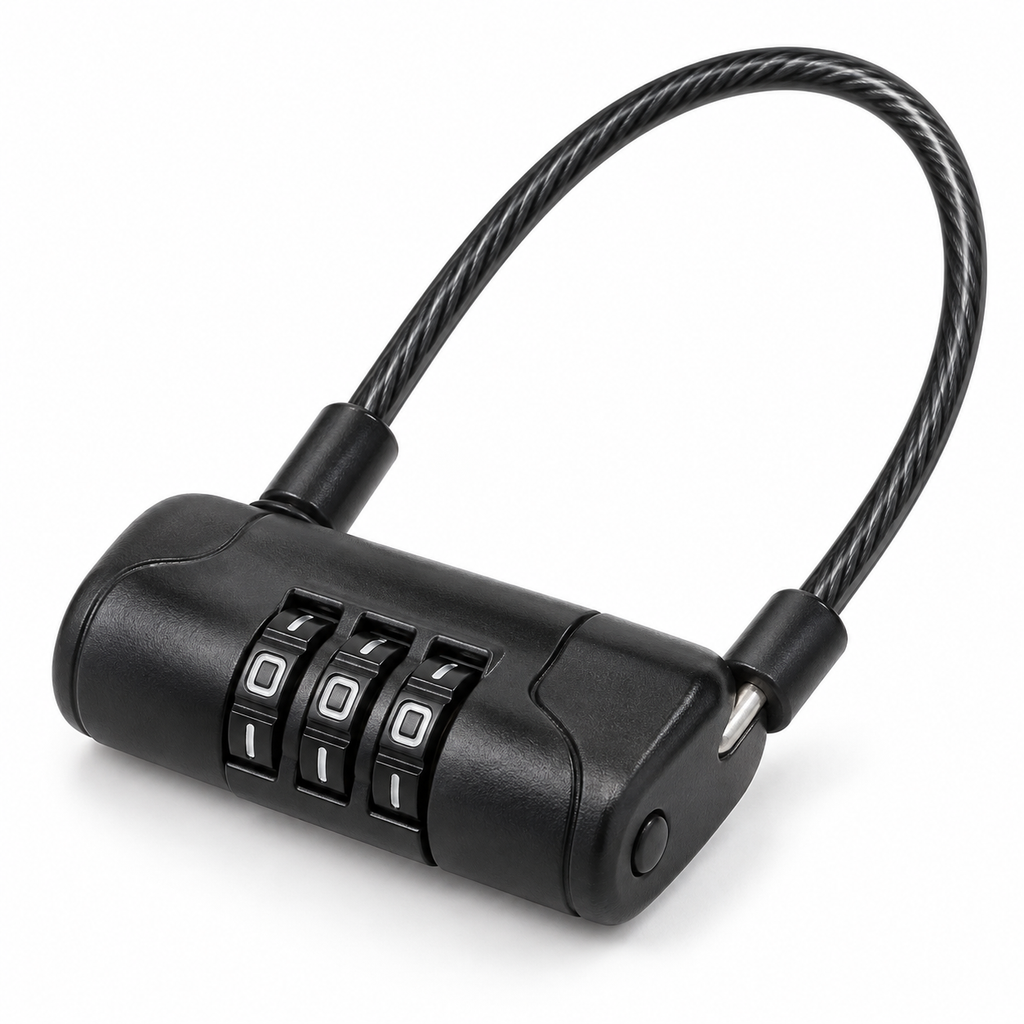
The Exo Terra Terrarium Lock (PT2620) is a combination lock designed for compatible Exo Terra glass terrariums.
It helps prevent accidental door opening and provides an additional way to secure the enclosure.
The manufacturer lists compatibility with its Natural Terrariums but specifically excludes certain specialty models, including the Dart Frog Terrarium PT2745 and Tree Frog Terrarium PT2746.
Why it’s worth considering: It’s a purpose-designed option for owners who have a compatible Exo Terra enclosure and want a secure door-locking mechanism.
Before buying: Confirm the exact terrarium model. This isn’t a universal lock for every front-opening enclosure.
Tip: Even with a lock installed, inspect the door alignment and surrounding gaps. A lock can’t fix a damaged or poorly fitted door.
4. Inspect Cable Openings and Equipment Pass-Throughs
Here’s an enclosure safety detail that’s surprisingly easy to overlook.
Many reptile terrariums include small openings designed for thermostat probes, lighting cables, sensors, and other equipment.
These openings allow you to install essential accessories, but they can also create escape risks if they’re left unsecured.
Some terrariums include adjustable cable inlets or built-in covers. Others use specific fittings to keep openings closed around installed cables.
What to check:
- Locate every cable opening.
- Make sure unused openings are securely closed.
- Check that installed cables don’t prevent the lid from closing.
- Use the enclosure manufacturer’s intended cable-management system.
- Inspect openings again whenever you change equipment.
Never pinch an electrical cable or force the lid closed to eliminate a gap. Damaging electrical wiring can create additional hazards.
Tip: Take another look at your cable openings after installing a new thermostat, thermometer probe, or lighting fixture.
For more information about your heating setup, read our essential heating and lighting guide for corn snake habitats.
5. Examine Screen Mesh and Ventilation Panels
Ventilation is essential for maintaining suitable conditions inside your corn snake’s enclosure.
However, the mesh and ventilation panels also need to be secure.
Over time, screens can become damaged, frames can bend, and removable panels may stop fitting as intended.
Inspect these areas during regular enclosure maintenance.
Look for damaged mesh, loose frames, broken fasteners, or panels that no longer sit securely.
Recommended Product: Zilla Fresh Air Screen Cover
View Zilla Fresh Air Screen Cover
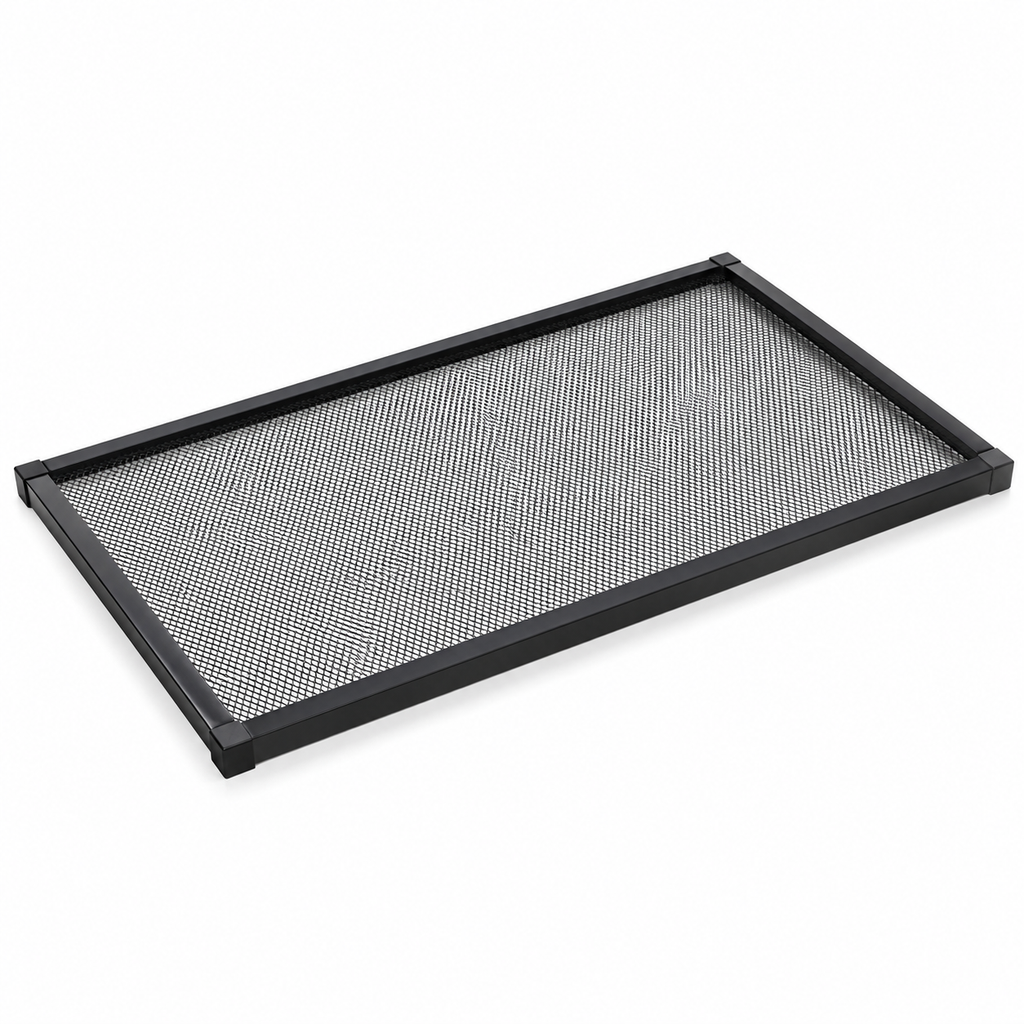
If your current removable screen lid is damaged or doesn’t fit properly, replacing it may be the safest option.
The Zilla Fresh Air Screen Cover features a black metal mesh screen and steel frame designed for ventilation and use with compatible reptile terrariums.
It’s available in several sizes to fit a range of standard enclosures.
Zilla also recommends pairing its screen covers with suitable screen clips for additional security.
Why it’s worth considering: It provides an option for replacing a damaged or unsuitable removable screen lid while maintaining ventilation.
Before buying: Measure your enclosure carefully, verify the exact lid model, and purchase compatible locking clips separately if needed.
Remember that a replacement lid isn’t automatically secure just because it’s made from sturdy materials. It still needs to fit and lock correctly.
6. Recheck Everything After Changing Your Enclosure
Adding enrichment is an important part of creating an engaging environment for your corn snake.
Branches, cork bark, hides, and plants give your snake opportunities to explore and demonstrate natural behaviors.
However, changing your habitat can sometimes affect how its equipment fits together.
For example, a tall branch might interfere with access to the lid, or a new cable could leave an opening that wasn’t there before.
After installing or moving equipment, check the enclosure again.
Important areas to review:
- Screen lid and frame alignment
- Clips and locking mechanisms
- Front-door latches
- Cable openings
- Ventilation panels
- Decorations that interfere with doors or lids
Whenever possible, complete major enclosure setup changes before bringing your snake home.
This allows you to inspect the entire habitat without disturbing your corn snake.
7. Create a Close, Lock, and Check Routine
One of the simplest ways to improve enclosure security is to build a routine you follow every time you open the habitat.
You don’t need an elaborate system. Just remember three steps.
Close: Make sure the lid, doors, and any access panels are properly positioned.
Lock: Engage all required clamps, latches, and locking mechanisms.
Check: Look around the frame, corners, cable openings, and ventilation panels before walking away.
This routine is especially helpful after cleaning, feeding, and other enclosure maintenance.
Tip: Include a reminder on your regular corn snake care checklist so the final security check becomes part of your routine.
Quick Comparison: Corn Snake Enclosure Safety Products
Not every corn snake owner needs all three products. The right choice depends on your existing enclosure and the problem you’re trying to solve.
| Product | Best for | Main thing to remember |
|---|---|---|
| Zilla Heavy Duty Screen Clips | Securing compatible removable mesh lids | Match the clip size and hardware to your enclosure |
| Exo Terra Terrarium Lock | Locking compatible Exo Terra glass terrarium doors | Check exact model compatibility |
| Zilla Fresh Air Screen Cover | Replacing a damaged or unsuitable screen lid | Confirm dimensions and use suitable clips |
Which Product Should You Choose?
If you already have a suitable glass aquarium and removable screen lid, compatible screen clips may be all you need.
If you use an Exo Terra terrarium with front-opening doors, check whether its existing lock is sufficient or whether the compatible combination lock would be useful.
If your current mesh lid is damaged, warped, or doesn’t fit, replacing it with an appropriately sized screen cover should take priority over adding more clips.
The goal isn’t to purchase the most accessories. It’s to make sure every part of the enclosure is secure and functioning as intended.
What Should You Never Use to Secure a Corn Snake Enclosure?
Some shortcuts might seem convenient but can create additional safety problems.
Adhesive tape: Never use exposed sticky tape to secure your snake’s lid or cover accessible gaps. Tape can stick to a snake’s skin and cause serious injuries.
Heavy books or bricks: Placing weights on top of a removable lid isn’t a dependable substitute for suitable locking hardware.
Blocked ventilation: Don’t cover necessary ventilation openings to prevent escapes. Your snake still needs adequate airflow.
Improvised electrical modifications: Never pinch wires, alter heating equipment unsafely, or force doors and lids closed around cables.
Incorrectly sized equipment: Don’t assume that any reptile lid, clip, or lock will fit your enclosure simply because the product looks similar.
When in doubt, consult your enclosure’s manufacturer about appropriate replacement parts and compatible accessories.
Corn Snake Enclosure Safety Checklist
Before bringing your corn snake home, complete these important checks:
- The enclosure is suitable for my snake’s size.
- The lid fits properly without unexpected gaps.
- All required screen clips or locks are installed.
- Front-opening doors close and latch completely.
- Sliding doors and corners have been inspected.
- Cable openings are properly secured.
- Ventilation panels and screen mesh are intact.
- No electrical cables prevent the enclosure from closing.
- Decorations don’t interfere with lids or doors.
- I’ve completed a final close, lock, and check inspection.
Save this checklist with your snake care records and review it whenever you make changes to the habitat.
Frequently Asked Questions About Corn Snake Enclosure Lid Safety
Can a corn snake push open its enclosure lid?
A corn snake may be able to escape through a loose or unsecured lid. Corn snakes are capable climbers, so a removable screen cover should be secured using compatible locking hardware rather than relying on its weight alone.
How many screen lid clips should I use?
The correct number depends on the size and design of your enclosure. ReptiFiles recommends at least four lid clamps for glass aquarium setups, with additional clamps for larger tanks. Always check the manufacturer’s instructions for your specific lid and clips.
Are front-opening terrariums safe for corn snakes?
Yes, a suitably sized front-opening terrarium can be a good choice when its doors fit properly and its locking mechanisms are secure. Inspect the door seams, locks, ventilation openings, and cable access points before housing your snake.
Can a baby corn snake escape through a small gap?
Yes. Young corn snakes are slender and may be able to fit through openings that appear insignificant. Make sure the enclosure is suitable for your snake’s size and carefully inspect potential escape routes.
Do I need a lock on my corn snake’s enclosure?
You need an enclosure with reliable security, but the exact locking method depends on its design. Some terrariums have suitable built-in latches, while removable screen lids generally require compatible clips or other approved fasteners.
Can I use tape to secure my corn snake’s lid?
No. Exposed adhesive tape can stick to your snake and cause injuries. Choose compatible enclosure hardware or replace damaged parts rather than using tape.
What should I do if my enclosure lid is damaged?
Stop relying on a damaged or poorly fitting lid. Check whether the manufacturer offers a compatible replacement, and make sure the replacement is correctly fitted and secured before using the enclosure.
How often should I check my corn snake’s enclosure?
Confirm that the lid and doors are secured every time you open the enclosure. Inspect the condition of locks, mesh, ventilation panels, and cable openings regularly, especially after maintenance or equipment changes.
Keep Your Corn Snake’s Home Safe and Secure
A secure enclosure is one of the foundations of responsible corn snake care.
Whether you’re preparing for your first snake or upgrading an existing habitat, taking time to inspect the lid, locks, doors, and small openings can help prevent escape problems.
You don’t need to purchase unnecessary accessories or make complicated modifications. Focus on properly fitted equipment, dependable locking mechanisms, and regular safety checks.
If you’re still planning your corn snake’s home, explore our guide to designing a safe and comfortable corn snake enclosure to learn more about creating a habitat with suitable heating, hides, enrichment, and security.
A few careful checks today can save you from searching behind the furniture for a very adventurous corn snake tomorrow!