Using feeding tongs is an important safety practice because it protects both you and your corn snake during feeding time. Corn snakes rely on movement and heat to identify food, which means fingers can be mistaken for prey if you are not careful. Feeding tongs create distance and reduce the chance of accidental bites. They also help keep feeding routines calm and controlled. Proper tool use makes feeding safer and more predictable.
Why Feeding Tongs Are Important
Feeding tongs keep your hands out of striking range during feeding. This reduces the risk of accidental bites caused by food response. Corn snakes do not bite out of aggression during feeding, but instinct takes over quickly. Tongs provide a clear separation between food and hands. Safety improves when distance is maintained.
Understanding Feeding Response Behavior
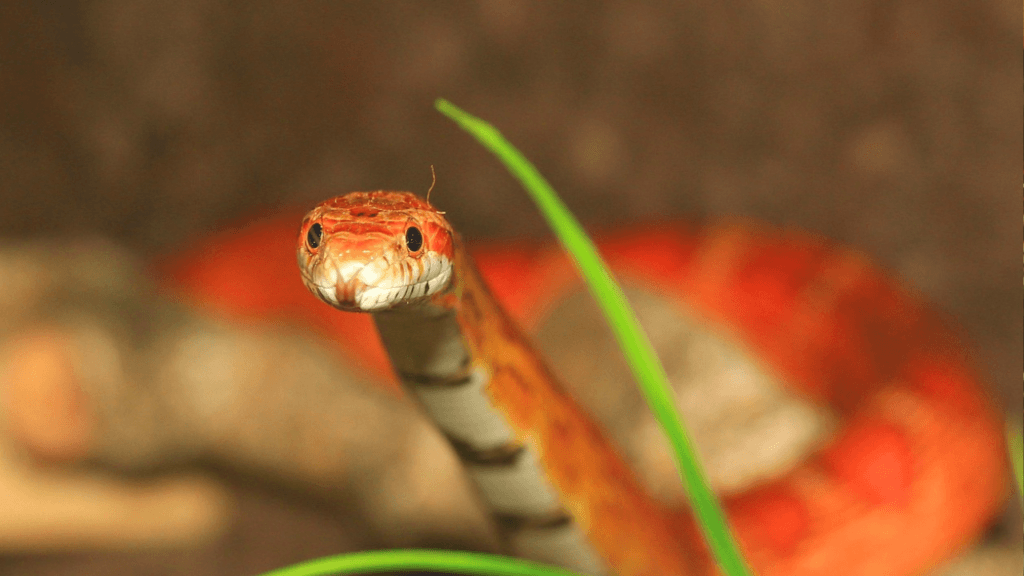
Corn snakes enter a focused feeding mode when prey is presented. Movement, scent, and warmth trigger a fast response. During this time, accuracy matters less than speed for the snake. Hands placed too close can be mistaken for food. Understanding this behavior helps prevent accidents.
Choosing The Right Feeding Tongs
Feeding tongs should be long enough to keep your hands safely away. They should have a secure grip to hold prey without dropping it. Smooth edges help prevent damage to prey or enclosure surfaces. Metal or sturdy plastic tongs work well. Proper tools improve control.
How To Present Prey Safely
Prey should be held firmly with the tongs and offered slowly. Gentle movement helps trigger interest without startling the snake. Sudden jerky motions can increase misdirected strikes. Keep your hands steady and calm. Controlled presentation reduces mistakes.
Avoiding Hand Feeding Mistakes
Hand feeding increases the risk of accidental bites. Fingers carry warmth and scent that resemble prey. Even calm snakes can strike reflexively. Using tongs removes confusion. Avoiding hand feeding protects both you and the snake.
Maintaining Consistent Feeding Cues
Consistency helps corn snakes distinguish feeding time from handling time. Using tongs every time reinforces a clear feeding signal. Snakes learn patterns through repetition. Mixed signals can cause defensive or feeding strikes. Consistency reduces confusion.
Feeding Location Considerations
Feeding inside the enclosure is generally safer and less stressful. Moving snakes to separate feeding containers is unnecessary. Familiar surroundings reduce stress and misdirected strikes. Tongs allow safe feeding without relocation. Stability supports calm behavior.
Preventing Accidental Bites
Accidental bites usually happen when hands move too close to prey. Keeping distance and moving slowly prevents this. Avoid hovering fingers near the snake’s head. Let the snake strike the prey naturally. Prevention relies on patience.
What To Do If A Bite Occurs
Accidental bites are usually minor and not dangerous. Sudden pulling can cause injury to the snake. Remaining calm allows the snake to release naturally. Washing the area afterward prevents infection. Calm responses reduce harm.
Avoiding Scent Confusion
Hands that smell like prey increase bite risk. Washing hands before feeding removes lingering scent. Handling prey and then touching enclosure items spreads smell. Clean hands reduce confusion. Simple hygiene supports safety.
Teaching Snakes Good Feeding Habits
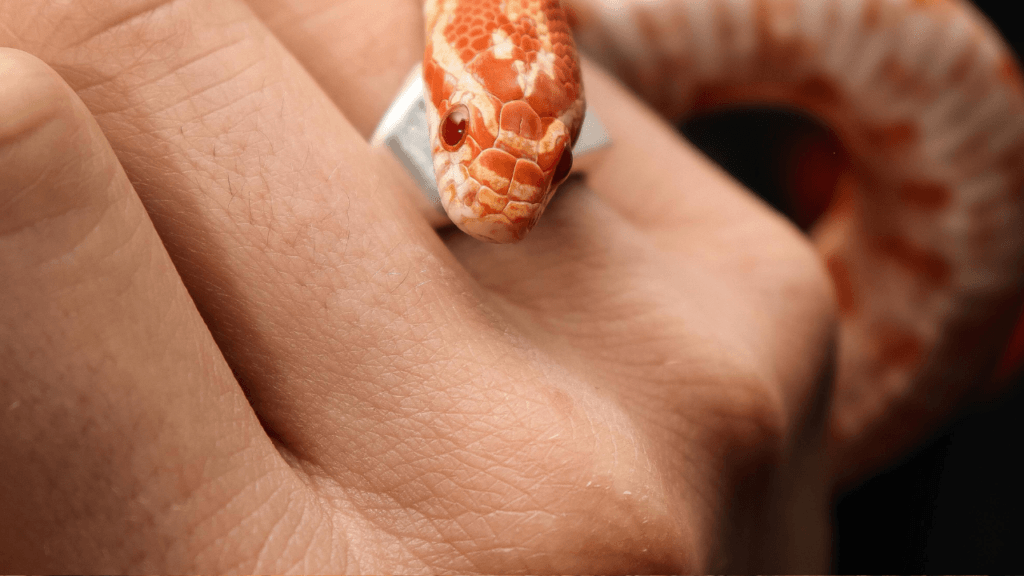
Consistent tong use helps snakes develop predictable feeding behavior. Snakes learn where food comes from. This reduces defensive strikes outside feeding time. Predictable routines create calmer interactions. Training happens through repetition.
Using Tongs With Hatchlings
Smaller snakes still benefit from tong feeding. Shorter tongs may be appropriate for small enclosures. Gentle movement is especially important with hatchlings. Confidence builds with calm feeding sessions. Early habits last long term.
Managing Strong Feeding Responses
Some corn snakes have very strong feeding responses. Extra distance may be helpful in these cases. Slower movements reduce misdirected strikes. Staying alert prevents accidents. Adjusting technique improves control.
Feeding Frequency And Bite Risk
Overly frequent feeding can increase food driven behavior. Snakes may become more reactive if always hungry. Proper feeding schedules reduce excessive feeding response. Balance supports calm behavior. Feeding frequency influences interaction.
Avoiding Distractions During Feeding
Feeding should occur in a calm environment. Sudden noises or movements can startle the snake. Distractions increase strike errors. Quiet conditions support accuracy. Calm feeding reduces risk.
Inspecting Tongs Regularly
Tongs should be checked for wear or looseness. Weak grip can cause dropped prey. Dropped prey may trigger erratic strikes. Well maintained tools improve reliability. Equipment checks support safety.
Teaching New Keepers Safe Feeding Practices
New keepers benefit from learning tong use early. Proper habits prevent fear and accidents. Confidence grows with safe routines. Education reduces mistakes. Good practices spread responsible care.
Long Term Benefits Of Using Feeding Tongs
Using feeding tongs consistently reduces bite incidents. Snakes develop clearer feeding associations. Keepers gain confidence and control. Feeding becomes predictable and calm. Long term safety improves for everyone.
Final Thoughts On Feeding Tongs And Bite Prevention
Feeding tongs are a simple but powerful tool in corn snake care. They reduce accidental bites and protect both snake and keeper. Consistent use builds clear feeding routines. Calm technique prevents mistakes. When feeding is handled safely, interactions become more relaxed and enjoyable.