Understanding corn snake behavior is one of the most valuable skills a keeper can develop because behavior is how your snake communicates comfort, stress, and overall well being. Corn snakes do not make noise or seek attention, so their actions are the message. Subtle movements, hiding patterns, and feeding responses all provide useful information. Learning to read these signals turns guesswork into informed care. When behavior is understood, problems are easier to prevent rather than fix later.
When I first started keeping corn snakes, I assumed that a quiet snake meant a happy snake. Over time, I learned that silence can mean many different things. Behavior only makes sense when viewed in context and over time. Once I started paying closer attention to patterns instead of single moments, everything became clearer. Observation became one of the most important parts of care.
TLDR: Understanding Corn Snake Behavior: What Your Pet Is Telling You
Corn snakes communicate through subtle but clear behaviors once you know what to look for. Tongue flicking signals curiosity and scent gathering, while hiding, burrowing, or climbing are normal exploratory and security-driven behaviors. Tail rattling, striking posture, or sudden freezing often indicate stress or defensiveness. Appetite changes and activity shifts can also reflect environmental issues like improper temperature or humidity. By learning your corn snake’s normal patterns, you can quickly recognize when something is routine behavior and when it may signal discomfort or a care adjustment is needed.
Why Behavior Is So Important In Corn Snake Care
Corn snakes rely on behavior to respond to their environment because they cannot communicate discomfort directly. Changes in behavior often appear before visible health issues. A snake may stop eating, move less, or hide more when something feels off. These changes are signals, not random actions.
Behavior also helps confirm when husbandry is correct. Calm exploration, regular feeding, and predictable resting patterns usually indicate comfort. When behavior remains steady over time, it suggests the enclosure is working well. Consistency is a good sign. Sudden changes deserve attention.

Understanding Normal Corn Snake Activity
Corn snakes are naturally more active during dawn and dusk. This means they may spend much of the day resting or hiding. Beginners often worry when they do not see their snake often, but this is normal. Activity patterns depend on light, temperature, and individual personality. Some snakes are naturally more visible than others.
Normal activity includes slow exploration, tongue flicking, and occasional climbing. Periods of stillness are also normal. Corn snakes conserve energy by resting frequently. Knowing what normal looks like prevents unnecessary concern. Observation over time builds confidence.
Interpreting Hiding Behavior
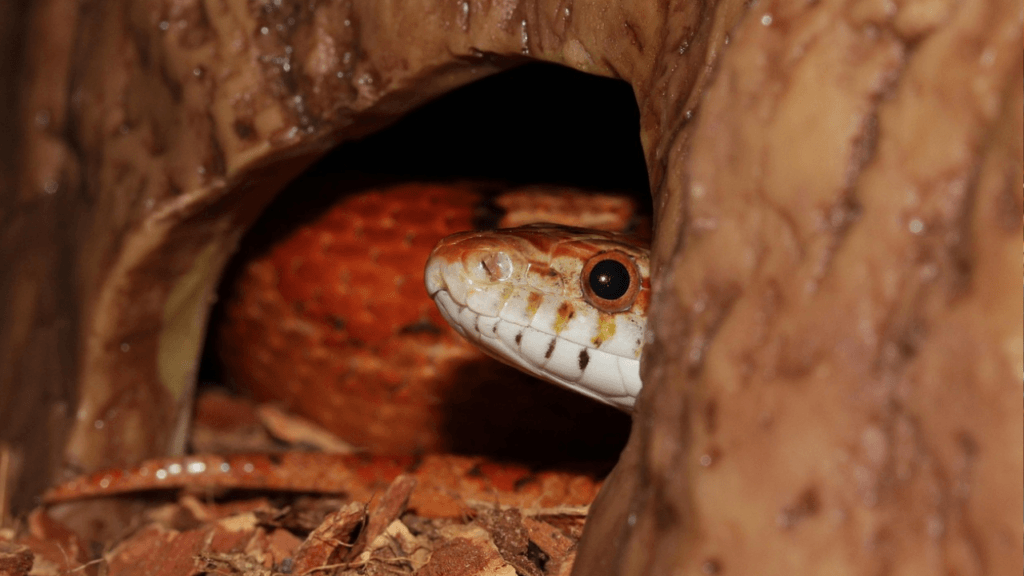
Hiding is a natural and necessary behavior for corn snakes. They hide to feel secure, rest, and regulate stress. A snake that uses hides regularly is not necessarily afraid. In fact, using hides appropriately is a sign of comfort. Hiding becomes concerning only when it is excessive or restrictive.
If a snake hides constantly in one location, it may be responding to temperature or security issues. If it avoids certain areas entirely, something in that space may feel unsafe. Proper hide placement on both warm and cool sides helps clarify these behaviors. Hiding should be a choice, not a requirement.
What Exploration Tells You
Exploration is one of the clearest signs of comfort. A snake that moves calmly through the enclosure is showing confidence. Tongue flicking during exploration indicates curiosity rather than stress. Exploration does not need to be constant to be healthy. Even occasional movement is meaningful.
Rapid or frantic movement can indicate stress. This may include repeated pacing along enclosure walls. Exploration should look relaxed, not rushed. Calm movement suggests the snake feels secure enough to investigate its environment. Behavior reveals how safe the enclosure feels.
Feeding Behavior As Communication
Feeding behavior provides important insight into comfort and health. A corn snake that eats consistently and calmly is usually comfortable. Sudden refusal to eat can be caused by shedding, temperature changes, or stress. One missed meal is rarely an emergency. Patterns matter more than single events.
Aggressive or frantic feeding responses can indicate overstimulation or poor feeding routines. Calm feeding suggests a balanced environment. Feeding behavior often improves when husbandry issues are corrected. Observation helps determine whether changes are needed.
If you need more guidance on Using Feeding Tongs And Avoiding Bites come check out this button
Understanding Defensive Behaviors
Defensive behaviors such as hissing, striking, or rapid retreat usually indicate fear rather than aggression. Corn snakes are not aggressive animals by nature. Defensive responses often occur when the snake feels exposed or startled. These behaviors are communication, not misbehavior.
Reducing defensive behavior usually involves improving security rather than increasing handling. More hides, visual barriers, and predictable routines help. Handling should be calm and limited until confidence improves. Defensive behavior often fades as the snake feels safer.
Shedding Behavior And What It Means
Shedding affects behavior temporarily. Many corn snakes become less active and may refuse food during shedding. Eyes may appear cloudy, and movement may slow. This is normal and should not be forced to change. Providing proper humidity supports clean sheds.
After shedding, behavior usually returns to normal. Increased activity often follows. Monitoring shedding behavior helps confirm humidity levels are appropriate. Difficult sheds often point to environmental issues. Behavior before and after shedding provides useful clues.
Thermoregulation As A Behavioral Signal
Corn snakes regulate body temperature by moving between warm and cool areas. A snake that uses both sides of the enclosure is regulating effectively. Staying only on one side may indicate temperature imbalance or insecurity elsewhere. Enrichment and hide placement affect this behavior.
Thermoregulation behavior is one of the clearest indicators of proper setup. When a snake chooses where to rest based on temperature, the gradient is working. Movement between zones is a positive sign. Behavior shows whether the enclosure design is functional.
Stress Signals To Watch For
Stress signals include constant hiding, pacing, refusal to eat, and sudden defensiveness. These behaviors often appear gradually. Stress rarely announces itself dramatically. Early recognition allows small adjustments to solve big problems. Ignoring stress signals allows issues to grow.
Stress often comes from enclosure issues rather than the snake itself. Temperature, security, and routine are common causes. Observation helps identify the source. Behavior improves once the environment feels supportive.
Avoiding Misinterpretation Of Behavior
It is important not to overinterpret behavior. Corn snakes rest often and may remain hidden for days. This does not automatically indicate a problem. Behavior should be evaluated in context and over time. One quiet day does not define health.
Comparing behavior to other snakes can also be misleading. Individual personalities vary. Some snakes are naturally more active. Others prefer staying hidden. Understanding your specific snake matters more than general expectations.
Using Behavior To Improve Care
Behavior is a feedback system. It tells you what is working and what is not. Adjustments should be based on observed patterns rather than assumptions. Small changes often lead to noticeable improvements. Care becomes more intentional when guided by behavior.
Over time, reading behavior becomes easier. Confidence grows as patterns become familiar. The snake becomes predictable rather than mysterious. That understanding improves long term care.
Long Term Benefits Of Behavioral Awareness
Long term awareness of behavior supports better health monitoring. Changes are noticed sooner. Stress related problems become less common. Care feels calmer and more informed. Behavior becomes a helpful guide rather than a source of worry.
Understanding behavior also strengthens the keeper’s confidence. Decisions feel intentional instead of reactive. Observation becomes routine. This benefits both the snake and the keeper over time.
FAQ: Understanding Corn Snake Behavior
Why is my corn snake hiding all the time?
Hiding is completely normal behavior. Corn snakes are naturally secretive and feel safest when they have secure hiding spots. If your snake is eating regularly and maintaining a healthy weight, constant hiding is not usually a problem.
However, if hiding is paired with refusal to eat or lethargy, review your enclosure setup and temperature gradient to rule out environmental stress.
Why does my corn snake flick its tongue so much?
Tongue flicking is how snakes gather information about their environment. It is a healthy and normal behavior. Increased tongue flicking often means your snake is exploring or detecting scent cues, especially during feeding time.
Why is my corn snake active at night?
Corn snakes are naturally crepuscular, meaning they are most active during dawn and dusk. Many will explore their enclosure more in the evening. This does not mean something is wrong.
Providing enrichment like branches and safe climbing structures supports this natural activity.
Why is my corn snake trying to escape or glass surfing?
Glass surfing or repeated attempts to climb enclosure walls can indicate curiosity, stress, or inadequate enclosure space. Double-check that your enclosure is large enough and includes secure hides on both the warm and cool sides.
Also confirm your temperature and humidity levels are correct, since environmental discomfort can increase restless behavior.
Why does my corn snake rattle its tail?
Tail rattling is a defensive behavior. It happens when your snake feels startled or threatened. It is more common in young snakes or newly rehomed pets.
Calm, consistent handling and a secure enclosure usually reduce this behavior over time.
Why is my corn snake burrowing under the substrate?
Burrowing is normal and instinctual. Corn snakes enjoy digging and often use substrate to regulate temperature and feel secure. Aspen bedding and similar substrates allow this natural behavior.
Burrowing only becomes concerning if paired with other stress signs like refusal to eat or constant attempts to escape.
Why is my corn snake suddenly more aggressive?
True aggression is rare in corn snakes. Defensive behavior is usually caused by stress, improper handling, shedding, or environmental issues.
If behavior changes suddenly, check temperature, humidity, recent feeding schedule, and enclosure cleanliness before assuming a temperament issue.
Why is my corn snake not moving much?
Corn snakes spend a lot of time resting. Reduced movement is normal during digestion and shedding. However, prolonged lethargy combined with other symptoms like wheezing or discharge may indicate a health issue.
Daily observation helps you distinguish normal rest from concerning inactivity.
Why does my corn snake soak in its water bowl?
Occasional soaking is normal, especially during shedding. Frequent soaking may indicate mites or irritation. If you notice excessive soaking along with tiny moving dots on the body, inspect for parasites and clean the enclosure thoroughly.
How can I tell if my corn snake is stressed?
Signs of stress include frequent defensive striking, musking, rapid movements, repeated escape attempts, refusal to eat, and tight body tension during handling.
Stress is often linked to improper enclosure setup, temperature imbalance, or inconsistent handling. Addressing environmental factors usually resolves the issue
Final Thoughts On Understanding Corn Snake Behavior
Corn snake behavior is constant communication for those who learn to observe it. Movement, hiding, feeding, and resting all provide valuable information. Behavior should be viewed over time and in context. Small signals often reveal big truths. When behavior is understood, corn snake care becomes clearer, calmer, and far more rewarding.