Corn snakes are one of the most popular pet snakes for beginners because they are generally calm, manageable in size, and forgiving of small mistakes. That said, beginner friendly does not mean no effort required. Proper care is still essential for keeping a corn snake healthy and stress free. Understanding the basics early makes everything easier as time goes on. This guide is meant to give new keepers a clear, realistic starting point without making things feel overwhelming.
When I first started, I expected corn snake care to be either extremely complicated or suspiciously simple. The truth landed somewhere in the middle. Once the fundamentals were understood, daily care became routine rather than stressful. Corn snakes thrive when their environment is consistent, predictable, and designed with their needs in mind. Learning those needs upfront saves a lot of trial and error later.
Understanding Corn Snakes As Pets
Corn snakes are non venomous constrictors that rely on their environment for warmth and security. They are naturally curious but cautious animals. In captivity, they do best when their enclosure supports natural behaviors like hiding, exploring, and thermoregulating. They are not social animals and do not require companionship. Solitary housing is both normal and preferred.
Corn snakes are also crepuscular, meaning they are most active during dawn and dusk. Beginners sometimes worry if they do not see their snake often during the day. This is normal behavior, not a problem. Understanding activity patterns helps prevent unnecessary concern. Observation over time builds confidence.
Choosing The Right Enclosure
The enclosure is the foundation of corn snake care. It should be secure, escape proof, and large enough to allow movement and temperature gradients. Floor space matters more than height, though some gentle climbing options are welcome. Front opening enclosures often make maintenance easier. Security should always be the top priority.
Ventilation is important but should be balanced. Too much airflow dries the enclosure, while too little traps moisture. Enclosures should be placed in quiet areas away from drafts and direct sunlight. Location affects temperature stability more than many beginners realize. A well chosen enclosure simplifies everything else.
Setting Up Proper Heating
Corn snakes rely entirely on external heat sources to regulate their body temperature. A temperature gradient is essential so the snake can move between warm and cool areas as needed. Heat sources should always be controlled by thermostats to prevent burns or overheating. Safety comes first.
Heating should be placed on one side of the enclosure. This allows the snake to warm up or cool down by choice. Nighttime heating may be necessary if room temperatures drop too low. Light emitting heat sources should be avoided at night. Consistency supports digestion and activity.
Lighting Basics For Beginners
Corn snakes do not require specialized UVB lighting, which is good news for beginners. However, they do benefit from a consistent day and night cycle. Simple enclosure lighting or natural room lighting can support this rhythm. Lights should be off at night to allow proper rest.
Timers can be helpful for maintaining consistency. Irregular lighting can disrupt behavior and cause stress. Bright lighting is not necessary. Predictability matters more than intensity. A stable cycle supports natural activity patterns.
Choosing Safe Substrate
Substrate affects comfort, cleanliness, and humidity. Aspen shavings are commonly used because they are absorbent and easy to clean. Coconut fiber and similar substrates can help with humidity but require monitoring. Paper towels are useful for quarantine or health monitoring. Each option has benefits.
Substrates that are dusty, scented, or made from pine or cedar should be avoided. These materials can cause respiratory issues. Substrate should support natural movement without irritation. Cleanliness matters more than appearance. Consistent maintenance keeps substrate safe.
Providing Hides And Enrichment
Hides are essential for corn snakes and should be placed on both the warm and cool sides of the enclosure. Snug hides help the snake feel secure. Additional cover such as plants or cork bark helps break up open space. Enrichment supports confidence and reduces stress.
Enrichment does not mean clutter. Items should be placed intentionally to create pathways and visual barriers. Corn snakes enjoy exploring when they feel safe. A well enriched enclosure supports natural behavior without overwhelming the snake. Balance is key.
Feeding Your Corn Snake
Corn snakes eat appropriately sized rodents, usually mice. Frozen thawed prey is the safest and most common option. Feeding schedules depend on the age and size of the snake. Juveniles eat more frequently than adults. Consistency supports healthy growth.
Feeding should be calm and predictable. Using feeding tongs helps prevent accidental bites. The snake should be left alone after feeding to digest properly. Handling too soon after meals can cause regurgitation. Feeding routines become easy with practice.
Handling And Interaction
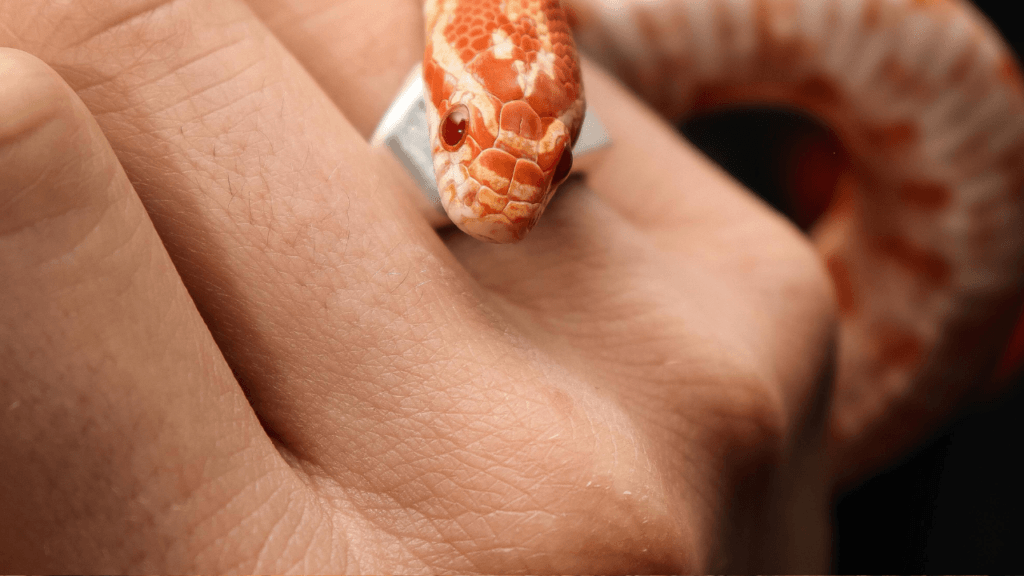
Handling should be gentle, calm, and infrequent at first. New snakes need time to settle into their environment. Short sessions help build trust over time. Handling should never happen right after feeding. Respecting boundaries reduces stress.
Corn snakes tolerate handling well when done properly. However, handling is not enrichment for them. It should be done for health checks and familiarity, not entertainment. Observation is just as important as interaction. A calm approach builds confidence.
Monitoring Health And Behavior
Behavior is one of the best indicators of health. Regular exploration, steady feeding, and normal shedding are positive signs. Changes in appetite, movement, or posture should be noted. Early observation helps catch problems before they escalate.
Shedding issues often point to humidity problems. Respiratory sounds may indicate improper airflow or moisture levels. Keeping basic records can be helpful for beginners. Patterns are easier to spot over time. Monitoring becomes second nature.
Cleaning And Maintenance
Regular maintenance keeps the enclosure healthy and odor free. Spot cleaning should be done as waste appears. Full substrate changes depend on the type used. Equipment should be checked regularly for proper function. Clean enclosures support stable conditions.
Overcleaning should be avoided. Excessive disruption can cause stress. A simple schedule helps maintain balance. Routine care becomes easier with repetition. Consistency supports long term health.
Common Beginner Mistakes To Avoid
Rushing setup is a common mistake. Guessing temperatures instead of measuring is another. Using unsafe heating equipment can cause serious harm. Skipping hides or enrichment increases stress. Most mistakes are preventable with planning.
Beginners often overreact to normal behavior. Corn snakes rest frequently and may hide for days. This is normal. Learning what is typical prevents unnecessary changes. Patience is one of the most important skills.
Long Term Care And Confidence
Over time, corn snake care becomes predictable and rewarding. Confidence grows as routines settle in. The snake becomes easier to read. Adjustments feel intentional rather than stressful. Experience builds understanding.
Corn snakes can live many years with proper care. Long term success comes from consistency, observation, and willingness to learn. Beginners do not need perfection. They need patience and attention. Good care develops step by step.
Final Thoughts On Corn Snake Care For Beginners
Corn snakes are excellent pets for beginners when their basic needs are understood and met. A secure enclosure, proper heating, consistent feeding, and thoughtful enrichment form the foundation of care. Observation guides improvement over time. Mistakes become learning opportunities rather than setbacks. With the right start, corn snake care becomes calm, enjoyable, and deeply rewarding.