
Choosing safe corn snake enclosure equipment is one of the most important parts of preparing a comfortable home for your snake. The right supplies help you manage temperature, humidity, security, and everyday care. However, not every product marketed for reptiles is suitable for corn snakes. Some equipment can create burns, injuries, escape risks, or unnecessary stress when installed incorrectly. Learning what to look for before buying supplies can help you avoid these problems.
A good enclosure should allow your corn snake to explore, hide, climb, drink, and regulate its body temperature. It should also make routine cleaning and health checks easier. Beginners sometimes focus on decorations before purchasing essential equipment. While an attractive habitat is wonderful, your snake’s needs should always come first. This guide explains how to choose enclosure equipment and identify common hazards.
TL;DR: What Equipment Does a Corn Snake Need?
A corn snake needs a secure, appropriately sized enclosure, a thermostat-controlled heat source, reliable digital thermometers, a hygrometer, suitable substrate, at least two snug hides, a stable water bowl, and enrichment. Appropriate lighting, including low-output UVB, is also recommended. Every item should be inspected for sharp edges, unstable construction, exposed adhesives, and other hazards before being placed inside the enclosure.
1. Choose an Enclosure That Provides Enough Space
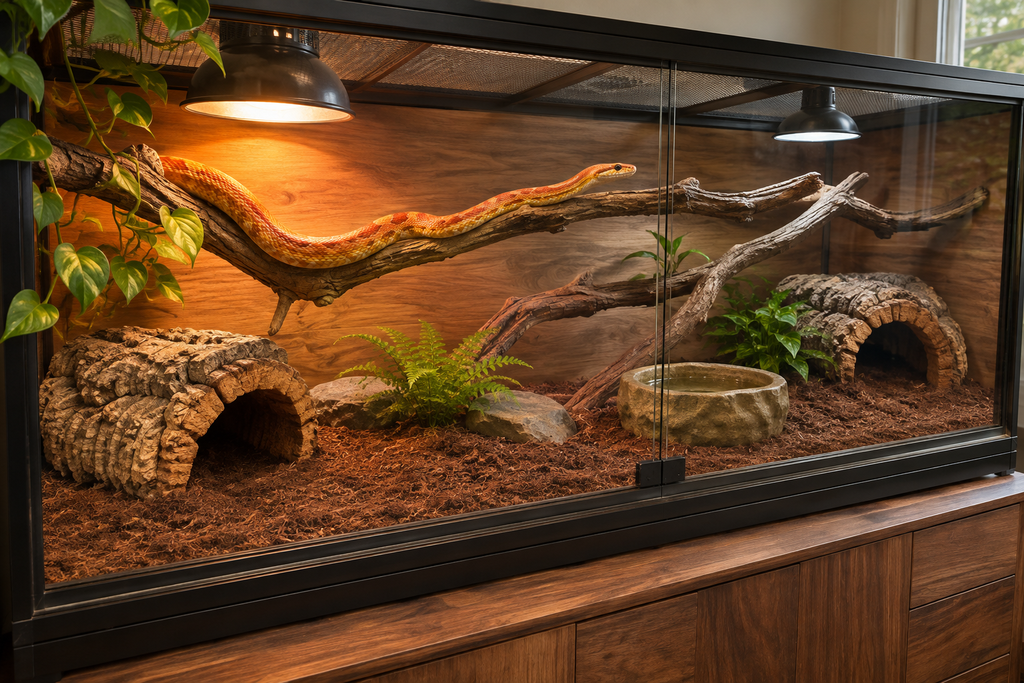
Your corn snake’s enclosure is the foundation of its habitat. It needs enough room to move naturally, stretch out, explore, and use different temperature zones. A cramped enclosure limits opportunities for normal behavior and can make temperature management difficult. The enclosure must also prevent escapes because corn snakes are surprisingly skilled at finding small openings. Choosing a suitable enclosure early can reduce the need for repeated upgrades.
For an average adult corn snake, a 4 × 2 × 2-foot enclosure is a commonly recommended starting size, although larger snakes may need more space. The enclosure should be at least as long as the snake when fully stretched along its longest dimension. Juveniles can live in smaller enclosures when those enclosures provide appropriate security, temperature control, and hiding places. Front-opening enclosures can make maintenance easier, while secure top-opening enclosures can also work. Whichever style you choose, check that doors, ventilation openings, and cable ports close securely.
For more guidance on choosing the right dimensions, explore our corn snake enclosure sizing guide.
Tip: Corn Snakes Can Live In A Glass Enclosure
A corn snake can live in a glass enclosure when it provides enough space, appropriate heating, secure ventilation, and reliable humidity management. Glass loses heat relatively quickly, so heating equipment must be selected and monitored carefully.
2. Select Heating Equipment With a Thermostat
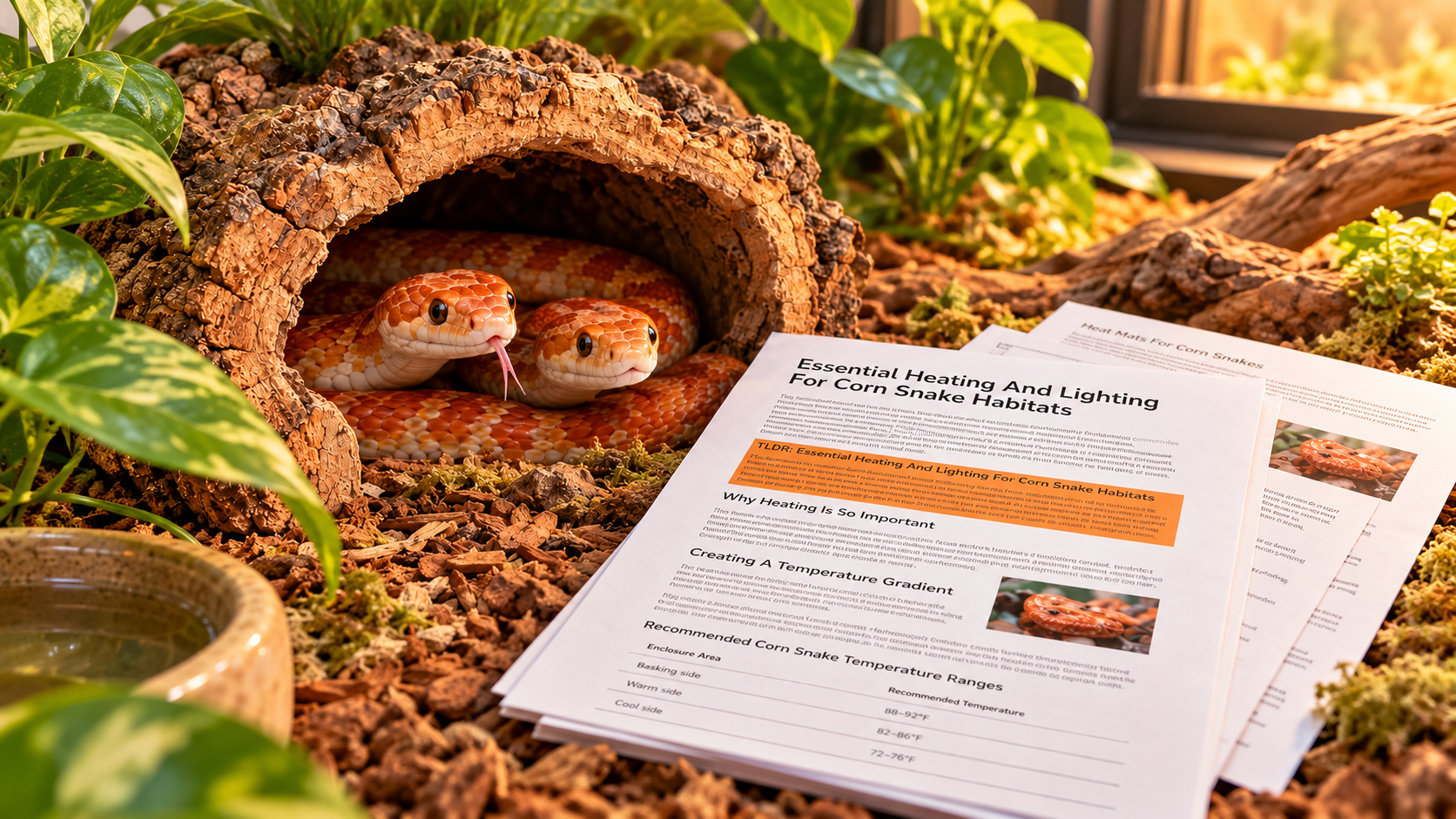
Corn snakes are ectothermic, meaning they depend on environmental temperatures to regulate their body temperature. Their enclosure needs a warm area and a cooler area so they can move between temperatures as needed. A suitable overhead heat source can help establish this gradient. However, heat-producing equipment can become dangerous when it is not controlled correctly. A thermostat is therefore one of the most important purchases for your setup.
A basking surface around 85–90°F is a commonly used target, with a cooler area generally around 72–78°F. Exact targets should be checked against reliable, current husbandry guidance and adjusted to the enclosure and animal. Halogen flood lamps can provide daytime basking heat, while other equipment may be appropriate depending on the setup. Heat lamps should be mounted securely, and any heating equipment accessible to the snake must have appropriate protection against contact burns. Heat rocks should be avoided because they can create dangerous localized hot spots.
Tip: Corn Snakes Need Heat At Night
Corn snakes can tolerate an appropriate nighttime temperature drop, so nighttime heating is not always necessary. If temperatures fall below the suitable range for the animal, a lightless, thermostat-controlled heat source may be needed.
Learn more about choosing heat sources and maintaining a day-night cycle in our corn snake heating and lighting guide.
3. Use Digital Thermometers and a Hygrometer
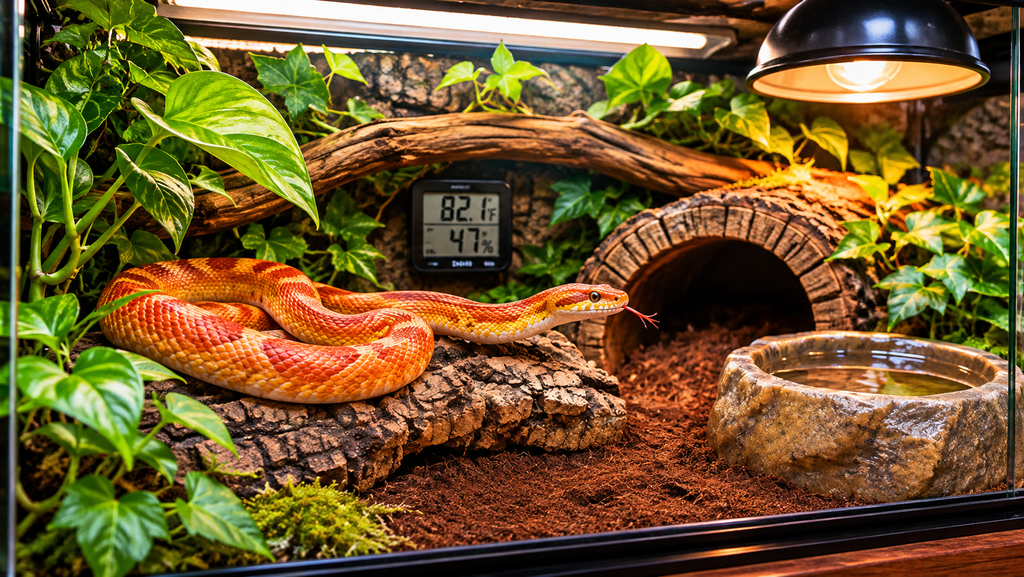
Heating equipment is only useful when you can verify the temperatures it produces. A thermostat controls a heat source, but it does not replace independent temperature measurements. Digital thermometers help you monitor conditions in the warm and cool areas. A digital hygrometer measures humidity, which is another important part of maintaining the enclosure. Together, these tools help you notice environmental problems before they become serious.
Place temperature probes where they measure the conditions your snake actually experiences. A temperature gun can also help you check basking surfaces, although it does not measure air temperature. Avoid relying entirely on inexpensive stick-on analog gauges because their readings may be less reliable. Humidity requirements vary with the enclosure, ventilation, substrate, and shedding needs. Many care guides describe approximately 40–60% relative humidity as a general range, but your setup should be monitored and adjusted based on your snake’s needs.
4. Choose Suitable Substrate
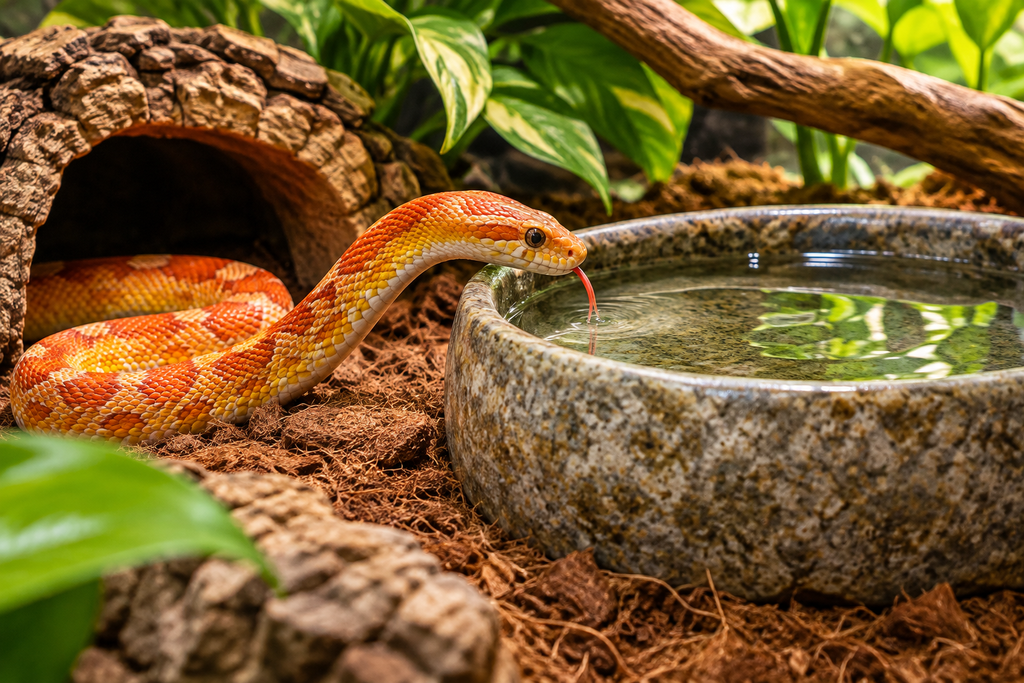
Substrate covers the enclosure floor and influences comfort, humidity, cleaning, and opportunities for natural behavior. Some substrates support burrowing, which many corn snakes enjoy. Others are easy to replace and useful when monitoring a new snake. The best choice depends on the enclosure, your snake’s needs, and how you maintain the habitat. Whatever material you choose, it should be clean, appropriate for reptiles, and free from hazardous additives.
Aspen shavings are a commonly used option for corn snakes, particularly in setups that do not require moisture-retentive bedding. Coconut-based substrates and suitable soil mixtures can also work when managed correctly. Paper towels are useful for temporary quarantine or health monitoring because waste is easy to see. Avoid cedar and pine shavings containing aromatic oils, scented bedding, dusty materials, and products treated with chemicals. Remove contaminated substrate promptly and replace bedding as needed to maintain clean conditions.
Tip: Corn Snakes Burrow In Their Substrate
Many corn snakes burrow when provided with suitable substrate depth and texture. Burrowing is a normal behavior that can provide enrichment and additional hiding opportunities.
Compare coconut fiber, aspen, and other materials in our corn snake substrate guide.
5. Provide at Least Two Secure Hides
Corn snakes need places where they can retreat and feel protected. A hide should be snug enough to provide security without trapping or squeezing the snake. At least one hide should be available in the warm area and another in the cool area. This allows the snake to choose a temperature without sacrificing its sense of security. Additional hides and covered areas can make larger enclosures more comfortable.
Choose hides made from durable, easy-to-clean materials without sharp edges or narrow openings that could trap your snake. Commercial reptile hides, suitable cork bark, and carefully inspected natural materials may all be useful. Heavy hides should be positioned so they cannot collapse or shift onto a burrowing snake. If a hide has an entrance, make sure the snake can enter and exit comfortably. A humid hide containing appropriately damp material can also help during shedding.
6. Choose a Stable Water Bowl
Fresh drinking water should always be available to your corn snake. A suitable water bowl should be stable enough that the snake cannot easily overturn it. The bowl must also be easy to remove and clean because snakes may occasionally contaminate their water. Some corn snakes soak in their bowls, particularly during shedding. Choosing an appropriately sized bowl helps support these behaviors.
Ceramic and other sturdy reptile-safe bowls are commonly used because they resist tipping. Avoid bowls with rough interior surfaces, sharp decorative edges, or materials that are difficult to sanitize. Place the bowl where it can be accessed easily without interfering with heating equipment. Replace the water regularly and immediately when contaminated. Wash the bowl thoroughly to reduce the buildup of waste and microorganisms.
7. Add Climbing Branches and Enrichment
Corn snakes are active animals that benefit from opportunities to explore their environment. Although they spend time on the ground and beneath cover, they can also climb. Branches, cork bark, tunnels, and suitable artificial plants can make an enclosure more interesting. Enrichment should encourage natural movement without creating unnecessary hazards. A well-designed habitat provides choices rather than forcing the snake to remain exposed.
Select branches that are sturdy, securely positioned, and free from sharp points or splinters. Avoid placing heavy decorations where they could fall or crush a snake. Artificial plants should not have exposed wires, loose pieces, or adhesive surfaces that could catch scales. Natural branches and decorations should come from appropriate sources and be cleaned before use. Inspect enrichment regularly because materials can loosen or deteriorate over time.
Tip: Corn Snakes Need Climbing Equipment
Climbing equipment is strongly recommended because corn snakes naturally explore elevated surfaces. Secure branches and platforms provide opportunities for exercise, exploration, and environmental enrichment.
8. Select Appropriate Lighting
Corn snakes benefit from a consistent day-and-night lighting cycle. A regular photoperiod helps provide predictable environmental cues. Daytime heating lamps may contribute to this cycle, but lighting and heating should be planned together. Low-output UVB lighting is also recommended by many modern reptile husbandry resources. The equipment must be selected and installed according to the enclosure dimensions and the manufacturer’s guidance.
UVB exposure depends on the lamp, distance, mesh screening, and placement of climbing surfaces. A bulb that is suitable for one enclosure may produce inappropriate exposure in another. Always provide shaded areas and hides so your snake can move away from the light. Avoid colored nighttime bulbs because they can interfere with a natural dark period. Use timers when helpful to maintain a consistent schedule.
9. Inspect Equipment for Hidden Hazards
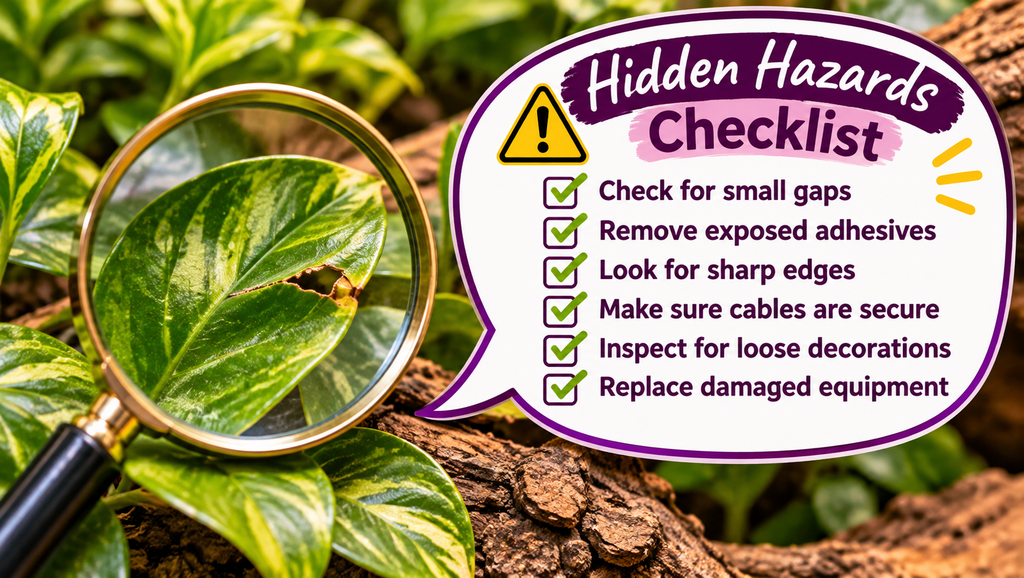
Even products sold specifically for reptiles can have design problems or become hazardous when used incorrectly. Small gaps, exposed adhesives, sharp edges, and loose decorations deserve attention. Heating equipment creates additional risks when snakes can touch dangerously hot surfaces. Poorly secured electrical cables may also create openings through which a snake can escape. Careful inspection should happen before equipment is installed and continue throughout its use.
Check every opening to ensure your snake cannot become trapped. Avoid adhesive tape inside the enclosure because it can stick to scales and cause injuries. Make sure electrical cables are routed securely and cannot be pulled loose. Inspect suction cups, climbing supports, and decorations for wear. Replace damaged equipment instead of trying to make an unsafe item last longer.
10. Test the Entire Setup Before Bringing Your Snake Home
Purchasing suitable equipment is only the beginning. Every item must work together to create stable enclosure conditions. Heating, lighting, ventilation, humidity, and security should all be tested before a snake moves in. This gives you time to correct problems without exposing your animal to unnecessary stress. It also helps you learn how the enclosure responds to changes in room temperature.
Run the completed enclosure for several days while monitoring temperature and humidity throughout the day and night. Confirm that the thermostat responds correctly and that the warm and cool areas remain within suitable ranges. Test the locks, doors, cable openings, and ventilation covers for possible escape routes. Check that hides, branches, and water bowls remain stable. Once the environment is working reliably, the enclosure will be better prepared for its new resident.
Before introducing your snake, review these common corn snake enclosure setup mistakes.
Common Corn Snake Enclosure Equipment Mistakes
Beginners sometimes purchase equipment based on appearance or advertising rather than the snake’s actual needs. A decorative hide might look beautiful but contain an opening that could trap a growing snake. A powerful heat lamp might seem useful but overheat a small enclosure. Similarly, an attractive substrate may be dusty, chemically treated, or difficult to maintain. Evaluating how equipment functions is more important than choosing the most elaborate products.
Another common mistake is relying on a single thermometer or skipping the thermostat entirely. This can leave dangerous temperature problems unnoticed. Some keepers also provide only one hide, forcing the snake to choose between security and its preferred temperature. Unsecured branches and decorations create avoidable injury risks. Regular inspections and reliable monitoring can prevent many of these issues.
Before introducing your snake, review these common corn snake enclosure setup mistakes.
Frequently Asked Questions
What equipment is essential for a beginner corn snake?
A beginner corn snake needs a secure enclosure, a thermostat-controlled heat source, digital thermometers, a hygrometer, suitable substrate, at least two hides, and a stable water bowl. Appropriate lighting and climbing enrichment are also recommended.
What enclosure size is best for an adult corn snake?
A 4 × 2 × 2-foot enclosure is a commonly recommended starting point for an average adult corn snake. The enclosure should be large enough for the snake to stretch out fully along its longest dimension, and larger individuals may need more room.
Are heat rocks suitable for corn snakes?
Heat rocks are not recommended because they can develop localized hot spots and cause burns. A properly installed, thermostat-controlled heat source is a better choice.
Do corn snakes need a thermostat?
Yes. Heat-producing equipment should be controlled by a suitable thermostat to reduce overheating risks and help maintain appropriate temperatures.
Can I use decorations from outdoors?
Some natural materials can be used, but they must be appropriately identified, inspected, cleaned, and prepared. Avoid materials exposed to pesticides, contamination, sharp fragments, or potentially harmful substances.
How often should I inspect enclosure equipment?
Check temperatures, water, and obvious hazards daily. Inspect hides, climbing structures, electrical equipment, and other decorations regularly, particularly during cleaning and after making changes to the enclosure.
Is UVB lighting necessary for corn snakes?
Corn snakes can survive without dedicated UVB lighting when other husbandry and nutritional requirements are met, but appropriate low-output UVB is recommended as a beneficial addition. It must be installed correctly to avoid excessive exposure.
Final Thoughts: Build a Habitat Around Your Snake’s Needs
Choosing corn snake enclosure equipment should begin with your snake’s health, security, and natural behavior. A reliable heating system, suitable enclosure, comfortable hides, and carefully selected enrichment provide the foundation for a well-managed habitat. Expensive decorations are not a substitute for appropriate environmental conditions. Simple, durable equipment often works well when it is selected and installed correctly. Taking time to inspect and test your setup can help you avoid many common beginner mistakes.
As your corn snake grows, continue evaluating its enclosure and making adjustments when necessary. Replace damaged equipment, monitor environmental conditions, and offer opportunities for exploration. Remember that each snake may use its habitat differently, so observation matters. A thoughtfully prepared enclosure supports both everyday care and long-term wellbeing. With the right equipment and consistent maintenance, you can create a home where your corn snake has room to thrive.